Pigment ink
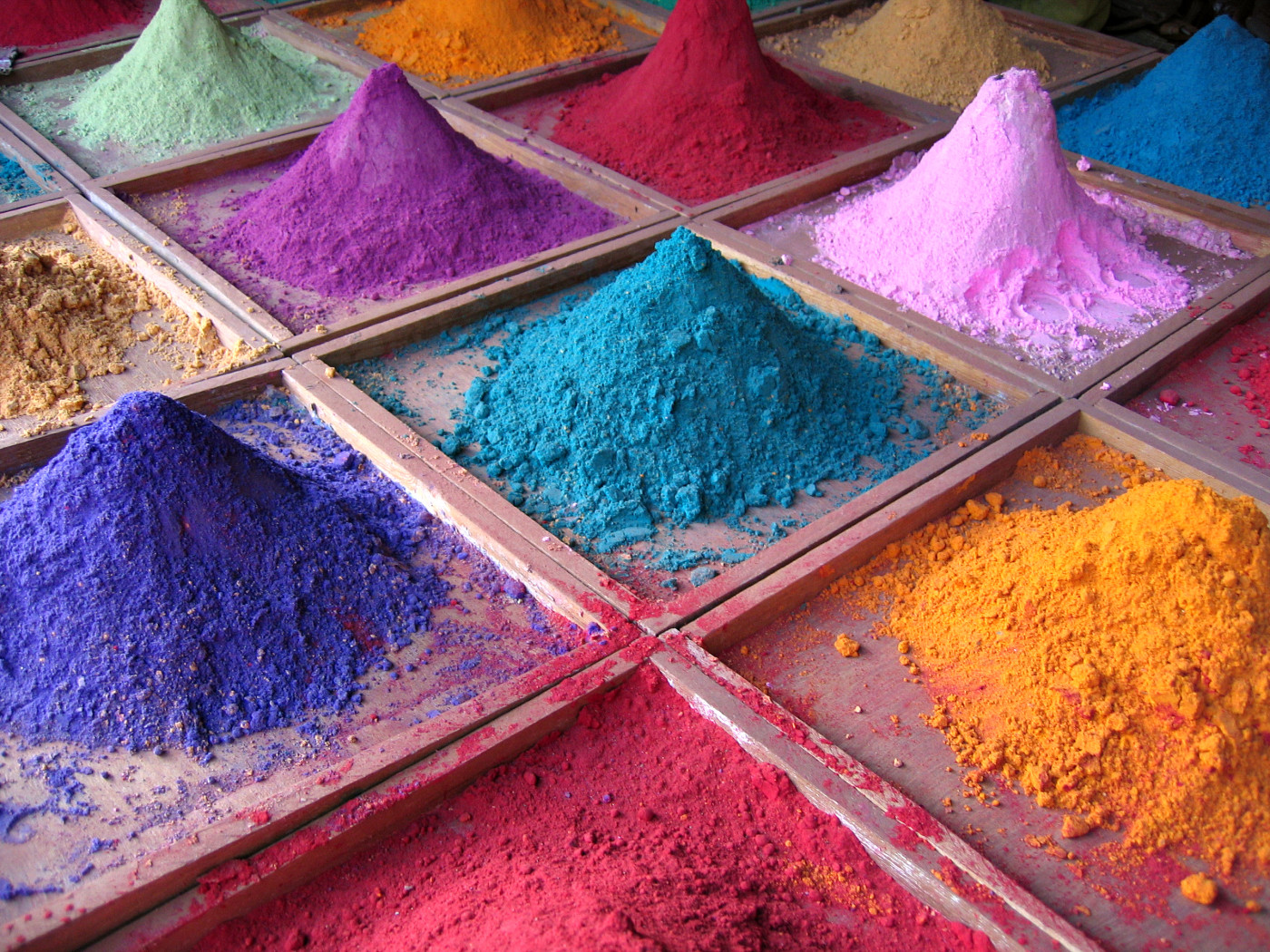
As you probably know, all products from printolino printed with solvent-free pigment ink. If you would like to find out more about pigment ink, this post is the right place for you.
Introduction
Pigment ink refers to the type of printing ink. Printer inks are always in liquid form in the ink tanks. The colour pigments can be bound in the liquid in two ways. With pigment ink (pigmented printer ink), the carrier liquid is enriched with colour pigments that do not dissolve in the liquid. This contrasts with dye ink (coloured ink). Here, the colour pigment is dissolved directly in the carrier liquid.
The differences and further details on the two types of ink are described below. You will also find information on the area of application, durability and properties of pigment ink.
What is pigment ink?
Für Druckfarben werden seit vielen Jahren Farbstoffe verwendet, die sich in dem Medium chemisch auflösen und eine Färbung verursachen. Im Gegensatz dazu verwenden pigmentierte Tinten Farbpigmente. Die kleinen Farbstoffe (Pigmente) sind fast unlöslich und verteilen sich lediglich im Lösungsmittel. Man spricht dabei von einer Dispersion.
Sobald die Pigmentdichte von der Lösungsmitteldichte abweicht, gehen die Pigmente auf den Boden der Kartusche. Um die Haltbarkeit von pigmentierter Tinte zu erhöhen, wird sie deshalb oft stabilisiert. Die Geschwindigkeit der Sedimentation hängt von der Grösse der Pigmentpartikel ab.
Je grösser die Pigmente sind, desto schneller ist die Sedimentation.
Interessant ist bei den beiden Tintenarten die äussere Farbunterscheidung. Bei farbstoffbasierenden Tinten erscheinen die helleren Farben (Gelb, Orange, Rot) im Behälter meist transparent, dunklere Farben (Blau, Violett, Grün) hingegen meist Schwarz. Im Gegensatz dazu ist sind die Farben bei Pigmenttinten wie auf dem Blatt gedruckt.
Pigment ink or dye ink?
Two types of ink can be used for an inkjet printer: With dye ink, the dyes themselves colour the ink. With pigment ink, on the other hand, the pigments are merely distributed in the liquid. No ink is better than the other. Depending on the application, there are only more suitable inks. Here are some advantages and disadvantages of the two types of ink.
PIGMENTTINTE
Advantages
- Waterproof, hardly smudges as the pigments are not dissolved in the liquid
- Sharper print image and higher colour brilliance. Particularly visible with small texts in serif fonts or with fine details
- Strong colour stability and colour fastness
- High light resistance (colour lasts for years)
- Resistant to chemicals
Disadvantages
- Slightly duller colours compared to dye ink. Nevertheless, the colours are still strong and vibrant.
- Pigments settle quickly on the bottom of the ink tank
DYE INK (DYE INK)
Advantages
- Particularly advantageous when printing photos and graphics.
- The dye molecules in the ink are evenly distributed on the paper and appear in rich, vibrant colours.
Disadvantages
- Water-soluble, i.e. not smudge-proof (e.g. when working with a highlighter pen, the colour runs and sticks to the marker)
- Poor light resistance, reduced durability, especially compared to pigment inks.
Which pigments produce beautiful colours?
There is not a single pigment that can provide all colours. On the contrary, there is a variety of pigments from which different colour groups can be obtained. Stronger colours can be produced by mixing different pigments.
The most important pigments are white titanium dioxide and black pigment (e.g. carbon black). The colour pigments also include ultramarine blue, cadmium orange, cobalt blue, iron oxide particles and mint.
The most popular and most frequently used pigments are
- Pigments of the earth: Obtained from ochre, for example. Mostly brownish colours are obtained, but bright colours are also possible.
- Mineral pigments: Extraction of pigments from magnesium. The palette ranges from white to blue.
- Metallic pigments: Pigments are obtained from aluminium and other metals. Produce metallic colours and effects.
- Carbon pigments: Extraction from direct carbon black. Often results in a pure black colour.
Optimum printing results thanks to ink, paper & settings
The ink manufacturers carry out regular tests to determine the current properties of the pigment ink and to continuously improve the inks. They check the inks for colour gamut, colour neutrality, homogeneous gloss behaviour and the best possible reduction of metamerism and bronzing. Often the smallest changes are enough to achieve a completely different result.
In order to achieve even better printing results, ink manufacturers have been combining dye ink and pigment ink for some time now. This gives you an ink that combines the advantages of both types of ink. The special text black, which is particularly suitable for text printing, can reproduce details even more accurately and prints in rich, vibrant black.
You as the user can also influence the colours of your print results. You can edit the colour profile of your printer so that the printouts match the desired colours.
For printing on Photo paper there are also special pigment inks for photo printers. If you combine the right paper with the right pigment ink (the packaging of the paper usually gives more precise instructions), you will get the best possible printing results for your photos. Don't forget to set your printer precisely. The "photo paper" setting is usually the right choice.
Compatibility of pigment inks with the printer
When purchasing, make sure that the ink is suitable for your printer. Not every ink is suitable for every printer. If you use the wrong ink, the pigments can clog the print head. This leads to greasy, blotchy and streaky colours and, of course, to an unsatisfactory print result. In the worst case scenario, the print head and/or nozzle may fail completely and need to be replaced. In less serious cases, a thorough cleaning of the print head is sufficient to remove the pigments.
Therefore, always pay close attention to the pigment ink you buy and make sure that it is optimally suited to your printer and print head.
Storage of the cartridges
As described above, the pigments can settle if you do not use them for a long time. We therefore advise you not to leave the ink unused in the printer for too long so that it does not dry out. If the ink has been in the printer for a long time, you can try shaking the container to recombine the pigments with the solvent.
Always store the pigment inks appropriately, e.g. in a cool, dry, dark place. This will ensure that the properties of the ink are not impaired. It is best to leave the pigment ink in the original, well-sealed packaging. When you take the ink out of storage, shake it vigorously a few times so that the pigments are properly distributed. Only then should you use the ink. Never buy too much pigment ink to fill your stock. The ink will dry out and become unusable if stored for too long.